

Kaeley Triller is the former Communications Director for a YMCA. One day she was asked to write talking points for a controversial new policy. When she learned the policy would allow people to choose their bathrooms and locker rooms based on gender identity, she felt compelled to share her story.
From a young age, from the time I was in diapers, I was being exploited. I had never had a showering experience that was safe. I showered in my underwear [when in the locker room] all the way through college…
I hadn’t, up to this point identified myself in a professional context as somebody who had experienced sexual trauma… But I needed her to understand this was important and we needed to think this through.
When she shared her story with her boss, Kaeley was met with a surprising response. She was given two choices: be terminated on the spot, or resign with severance.
Kaeley declined the severance package and began sharing her story publicly. In her own words, “I’d been silenced enough, in my life.” Unfortunately, Kaeley’s story is not unique.
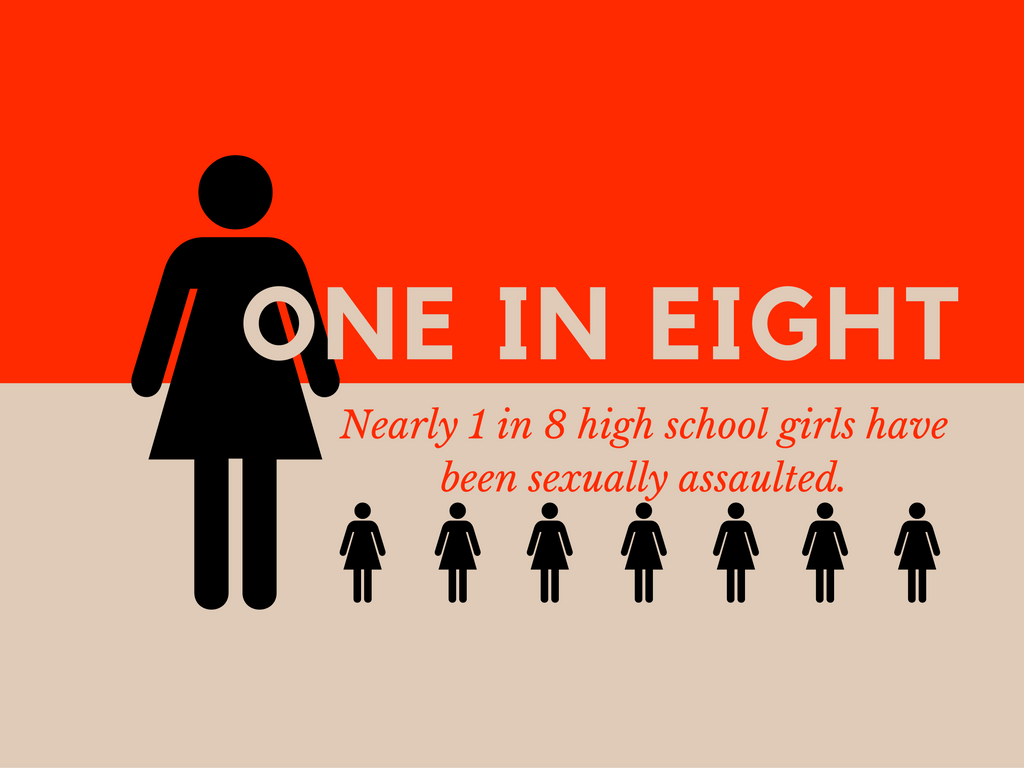
Statistics indicate that 1 in 8 high school girls have been sexually assaulted [1]
Victims of sexual abuse often suffer from PTSD, or post-traumatic stress disorder, depression and dissociation. Emotions range from anger and blame, to shock and numbness, helplessness, fear and self-blame [2]. Healing from sexual abuse is a lifelong journey.
Practical Consequences of Open Bathroom and Locker Room Policies
 Omaha public schools is currently considering adding gender identity and gender expression to their nondiscrimination policy. A practical consequence of this would be that it opens the door for some students to use the bathrooms and locker rooms of the opposite sex.
If a student who identifies as the opposite sex is allowed access to those spaces, the other students who use them are in a position to:
1. Be exposed to the unclothed or partially clothed body of someone of the opposite biological sex; and
2. Expose their own unclothed or partially clothed body to someone of the opposite biological sex.
The Reality of Triggers for Sexual Abuse Survivors
 The possibility of encountering someone of the opposite sex in a vulnerable location like a bathroom or locker room puts victims of sexual abuse into the position of being triggered daily. Experts agree that encountering a trigger “doesn’t cause the victim to remember the traumatic event, it causes them to relive it.” [3]
For many sex abuse survivors, the mere presence of a male in a women’s restroom, locker room, or changing room is a trigger – regardless of that person’s intentions.
If the statistics hold true, in a gym class of 32 female students, there’s likely 4 victims of sexual abuse. If there’s a biological male in their locker room, that’s 4 girls reliving their trauma every Monday, Wednesday and Friday at 2:00pm.
Bodily privacy is a Constitutional right that schools have a responsibility to protect. Therefore, schools should craft policies that are both respectful of the privacy rights of all children and sensitive to the diverse needs of individual children.
[1] It’s common sense: No men in the women’s restroom. Available at https://www.adflegal.org/safe-bathrooms
[2] Effects of Sexual Assault and Rape. Joyful Heart Foundation. Available www.joyfulheartfoundation.org
[3] Trauma Transference Syndrome. Available at https://www.traumatransferencesyndrome.com/

Karen Bowling
Latest posts by Karen Bowling (see all)
- The NFA Daily Spotlight: Passing The Torch - January 3, 2025
- The NFA Daily Spotlight: Merry Christmas From The NFA Team - December 23, 2024
- A New Chapter for Life: Building on the Historic Wins of 2024 - December 13, 2024